AEC firms across developed markets are operating under mounting pressure to deliver increasingly complex projects while managing skilled-engineer shortages, recruitment lead times, rising personnel costs and fluctuating workloads. These realities are changing the role of engineering outsourcing.
What was once viewed primarily as a mechanism for reducing drafting costs is increasingly becoming a strategic capacity model, enabling firms to access specialized technical talent, scale teams around project pipelines and maintain delivery schedules without continuously expanding permanent headcount.
Within this evolving landscape, Vietnam has emerged as a valuable engineering talent base, supported by a young technical workforce and growing proficiency in international engineering software and workflows. Aidedo has built its operations around connecting this capability with the resource requirements of engineering companies overseas. Over nearly a decade, the company has grown to close to 100 engineers across six operating offices and completed more than 10,000 projects for clients in the United States, Australia, the United Kingdom, Canada, Ireland, Scotland and other international markets.
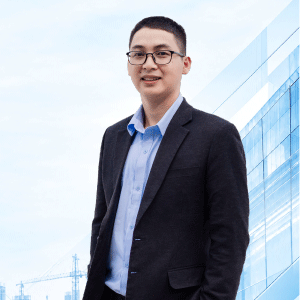
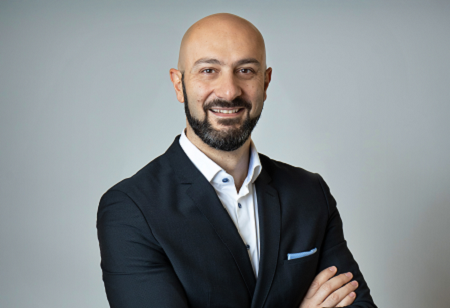
The company was founded by Aiden Tong, CEO & Founder at Aidedo, whose understanding of this opportunity developed through firsthand exposure to the Architecture, Engineering & Construction industry in the United States. Having grown up in a family associated with a traditional confectionery business in rural South Central Coast Vietnam, Aiden Tong went abroad to study and work.
There, he observed the persistent challenges AEC firms faced in recruiting skilled engineers, controlling in-house staffing costs and quickly responding to changing workloads. On returning to Vietnam, he recognized an opportunity to connect these international requirements with the country’s technically capable engineering workforce. That insight became the foundation of Aidedo.
FROM DRAFTING SUPPORT TO SPECIALIZED ENGINEERING CAPABILITY
Aidedo’s evolution reflects the broader transformation taking place within engineering outsourcing itself. Starting with CAD drafting capabilities, the company has steadily expanded into Civil Engineering, Land Development Design, Land Survey Drafting, Civil 3D Works and related specialized services. Today, its proposition is structured around two primary areas: outsourced civil engineering design and drafting, and outsourced land surveying drafting.
Its civil engineering capabilities cover land development, subdivision, grading and drainage plans, utility modeling, Civil 3D modeling and 12D modeling, among other requirements. On the land surveying side, its engineers support topographic surveys, ALTA surveys, contour and detail surveys, builder surveys including final surveys, plot plans and setback surveys, Point Cloud-to-CAD conversion, boundary surveys and 3D surface modeling.
The breadth of this capability, however, is only one part of Aidedo’s model. International engineering projects rarely operate through identical standards or documentation practices. Drawing templates, design conventions, technical requirements and workflows can vary substantially between companies and jurisdictions. Aidedo therefore structures project delivery around three considerations: the client’s own standards and processes, applicable regulations and standards in the project’s location, and the specific technical requirements of the assignment.
This ability to integrate with established client practices is central to the company’s ambition to function as an extension of an engineering team rather than simply an external drafting vendor.
SCALING CAPACITY WITHOUT COMPROMISING CONTROL
One of outsourcing’s strongest advantages is its ability to convert fixed engineering capacity into a more flexible resource model. Aidedo enables engineering firms, contractors and developers to adjust team strength according to workload rather than maintaining staffing levels for peak project periods throughout the year.
The company estimates that its model can help clients save up to 50 percent across operating costs, licensed software, personnel and infrastructure. To proactively control the outsourcing budget, it offers Hourly Rate, Fixed Price and Dedicated Team engagement models. The latter has become increasingly significant as individual assignments have evolved into longer-term client relationships, indicating a shift from transactional project execution toward embedded engineering partnerships.
“Aidedo organizes this flexibility around what it identifies as four core foundations: resource scalability, output quality and turnaround time, project visibility and control, and cost efficiency.
The intention is to ensure that scaling a team does not require clients to trade delivery speed against consistency or visibility”, says Aiden Tong, CEO & Founder at Aidedo.
Beyond resource flexibility, Aidedo places strong emphasis on meeting project deadlines. Supported by an experienced and well-trained engineering team, the company is committed to delivering work professionally and on schedule, even when multiple projects are being handled simultaneously. This commitment allows clients to manage fluctuating workloads without compromising delivery timelines.
Its internal operations are aligned with ISO 9001:2015 quality-management practices and ISO/IEC 27001:2022 information-security requirements. Projects move through a defined workflow beginning with data and requirement intake, followed by clarification, technical execution, quality checking, delivery, incorporation of client feedback and completion. Progress, project documentation and invoices are updated weekly, giving clients continued visibility into ongoing work.
Communication is conducted entirely in English, while meetings are arranged around clients’ respective time zones. Combined with Vietnam’s time-zone position, this can also create useful workflow continuity and reduce response and delivery cycles for overseas clients. Confidential information is protected through NDAs alongside the company’s information-security processes.
TECHNOLOGY, QUALITY & THE ENGINEERING TALENT PIPELINE
As engineering outsourcing becomes more technically integrated, software proficiency alone is no longer sufficient.
Teams must be capable of operating within digital workflows that closely mirror those of their clients. Aidedo has consequently developed expertise across civil engineering, surveying, CAD and digital modeling platforms, utilizing seven specialized software programs: Autodesk Civil 3D, AutoCAD, Revit, InfraWorks, 12D Model, HydroCAD and Carlson. These tools support the company’s ability to address diverse technical requirements while maintaining accuracy, consistency and efficiency across international projects.
Its technology development is reinforced through professional exchanges, workshops, training programs and direct working sessions with Autodesk and 12D Model. According to Aidedo, Autodesk has also connected the company with clients whose requirements align with its capabilities, reflecting a relationship extending beyond software usage into industry engagement.
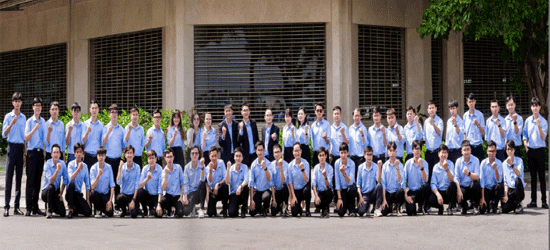
“Equally important is the human capability behind these platforms. Rather than depending entirely on experienced lateral hiring, Aidedo is developing an engineering talent pipeline through collaborations with universities and seminars aimed at identifying potential recruits while they are still studying. Engineers joining the company subsequently undergo specialized development through its Aide Academy platform, supported by regular manager-led training and defined promotion pathways”, shares Aiden Tong.
Employee retention is approached through benefits beginning at the probationary stage and a workplace culture articulated around “Fairness - Love - Discipline.” Sports, team-building initiatives and community-service activities are used to strengthen engagement alongside professional development. From a small startup created to connect Vietnamese engineering talent with international demand, Aidedo has developed into a multi-office engineering partner supporting thousands of projects across global markets
The same learning philosophy extends into project quality. Feedback and experience from completed assignments are converted into updates to SOPs, checklists, QA/ QC mechanisms and internal technical documentation. These changes are then incorporated into subsequent training, creating a continuous cycle in which project experience feeds standardization, standardization feeds learning, and learning improves future delivery.
Complementing this process, Aidedo regularly researches emerging technologies, stays updated on changes in industry standards and monitors evolving client requirements. These insights enable the company to continuously refine its working methods, strengthen technical capabilities and improve service quality in response to changing industry expectations.
MOVING TOWARD BIM, AI & DEEPER GLOBAL PARTNERSHIPS
Civil engineering outsourcing is entering another stage of change as BIM, automation, AI and digital engineering reduce the amount of repetitive manual work involved in project delivery. For outsourcing providers, this creates both an opportunity and a higher competitive threshold.
Value will increasingly depend not simply on providing engineering hours at a lower cost, but on combining technical judgment, digital fluency, speed and seamless integration with client systems. Clients are increasingly demanding regarding quality, speed, security, and specific standards.
“Aidedo is positioning its next phase around this transition. The company plans to broaden its capabilities into BIM and Digital Engineering while integrating AI and other digital technologies to improve productivity, quality control and turnaround times. As automation absorbs more repetitive activities, it intends to continually strengthen its engineers’ knowledge and ability to work with emerging tools rather than treating technology as a substitute for engineering expertise”, highlights Aiden Tong, CEO & Founder at Aidedo.
Geographically, the company intends to deepen long-term relationships in key markets including the United States, Australia, the United Kingdom and Canada. Its growing use of Dedicated Team arrangements provides a foundation for this strategy, allowing Aidedo to move further from project-by-project outsourcing toward sustained integration with clients’ engineering operations.
From a small startup created to connect Vietnamese engineering talent with international demand, Aidedo has developed into a multi-office engineering partner supporting thousands of projects across global markets. Its next chapter is focused on making that bridge stronger-combining scalable talent, disciplined delivery and emerging digital capabilities to help engineering companies expand capacity while keeping their core resources focused where they create the greatest value.
We use cookies to ensure you get the best experience on our website. Read more...


.jpg "Technology in Cancer Care: A story of evolving paradigms")
.jpg "Bringing Shop Floor to Manufacturer's palm: Smart Factory Solutions for tomorrow")