In recent years, the exploration and exploitation of natural resources and energy have intensified. This growing pressure is driven by economic expansion, population growth, and the rising demand for energy and natural resource. Yet behind these developments lies a persistent lack of attention to sustainability and environmental concerns. Many resource extraction activities continue without proper regard for biodiversity, ecological balance, pollution, or climate change.
Exploitation advances rapidly, while environmental considerations fall behind. Such negligence can lead to long-term damage that affects not only ecosystems but also the well-being of the communities that depend on them. Amid these challenges, a new sense of responsibility has begun to emergea desire to contribute more meaningfully to the sustainable management of natural resources, energy, and the environment. This shift underscores the need for an institution capable of bridging scientific insights, community interests, and the demand for sustainable policy.
Against this backdrop emerges the work of the Institute for Natural Resources, Energy, and Environmental Management (IREEM). The organization was established in 2016 by Doctoral alumni of IPB University under the name Center of Natural Resources, Energy, and Environmental Studies (CNEE), before later adopting the name IREEM. It began as a think tank organization and has since evolved into a platform for informed dialogue, evidence-based assessment, and collaborative action in a sector where decisions carry long-term consequences.
IREEM has never positioned itself as a distant observer. Instead, it sees itself as a bridge linking scientific knowledge with the lived experiences of communities. This blend of aspiration and pragmatism is reflected in its vision: to become a reputable institution in the sustainable management of natural resources, energy, and the environment. Rather than pursuing slogans or abstract ideals, IREEM focuses on work that deepens understanding, supports informed decision-making, and translates research into practice.
Since its establishment, IREEM has implemented more than 50 unique projects and collaborated with over 500 institutions, including government bodies, private sector entities, academic institutions, and international development partners. IREEM has earned the trust of major programs and organizations such as UK PACT, GIZ Explore, GIZ SETI, the Coal to Clean Energy Initiative, PYC, Danida, and GSI, and has worked closely with key ministries as well as provincial governments across Indonesia.
Understanding the Approach to Energy & Environment
Dr Ir. Arief Yunan, Executive Director, IREEM explains, “Our primary mission is to advance sustainable development through research, advocacy, partnership, and capacity building. By applying our core values in every program and partnership, IREEM aims to deliver credible knowledge, promote evidence-based policies, and support effective solutions for environmental, energy, and natural resource challenges at both national and regional levels”.
IREEM’s largest portfolio consists of donor-funded programs designed to accelerate Indonesia’s transition toward sustainable energy development, environmental solutions, and responsible natural resource management. Its second-largest portfolio focuses on professional services spanning studies, research, assessments, and audits.
Through this work, IREEM helps private sector clients identify and address specific challenges within their operations. Evidence-based analyses are used to uncover root causes, while practical, actionable recommendations are provided to improve performance, reduce risks, and support long-term sustainability.
Partnerships form another central thread in IREEM’s approach. The organization works closely with institutions both domestically and internationally, acknowledging that environmental and energy issues seldom adhere to geographic boundaries. These collaborations bring diverse perspectives and open the door to joint initiatives. In many cases, IREEM serves as a collaborator—linking government with the private sector or helping international organizations understand on-the-ground conditions and community needs.
Growth Shaped by Learning & Practical Impact
What distinguishes IREEM’s journey is its ability to preserve its academic roots while continually adapting to changing realities. Its origins as an initiative founded by IPB University alumni still shape the organization’s outlook: curiosity, rigorous assessment, and a willingness to question assumptions remain central to its work. The transition from CNEE to IREEM marked not just a change in name, but a deliberate expansion of scope and ambition. “The company now engages in analysis, capacity building, and public-facing discussions, recognizing that sustainable outcomes depend on participation as much as policy”, explains Arief.
IREEM’s projects often weave together multiple areas of expertise. A research study may be complemented by specialized training; a community outreach effort may evolve into collaboration with external institutions. Through these interconnected layers, the organization builds continuity a rare but essential quality in environmental work, where lasting change requires patience, clear communication, and the ability to learn from both successes and setbacks.
The organization’s pragmatic and grounded approach has earned recognition from both national and local institutions. The Ministry of Finance of Indonesia acknowledged IREEM’s contributions to implementing energy-saving practices in public buildings, noting that its audits, energy-manager training, and technical recommendations were not only accurate but also immediately applicable.
The Energy Conservation Directorate at the Ministry of Energy and Mineral Resources also commended IREEM, highlighting its work under the UK PACT program as one of the most successful collaborative initiatives with a development partner delivering tangible, measurable results in energy conservation.
Our primary mission is to advance sustainable development through research, advocacy, capacity building, and partnership
A Future Grounded in Knowledge & Collaboration
IREEM’s journey reflects a belief that credible knowledge, sustained engagement, and shared learning can strengthen the way societies manage their natural resources. In a sector often defined by complexity, IREEM plays a key role in translating technical information into accessible insights, building meaningful relationships, and fostering discussions that move beyond short-term perspectives. As debates around climate, energy, and natural resources continue to evolve, IREEM remains committed to its purpose: supporting decision-making that is sensitive to both people and the environment, and doing so with clarity, patience, and integrity.
Looking ahead, the organization will continue to advance its expertise and refine its services, contributing to national and global sustainability agendas including Indonesia’s goal of achieving net-zero emissions by 2060 and sustainable development goals. This work underscores the importance of collective responsibility and highlights the power of collaboration across communities, institutions, and sectors.
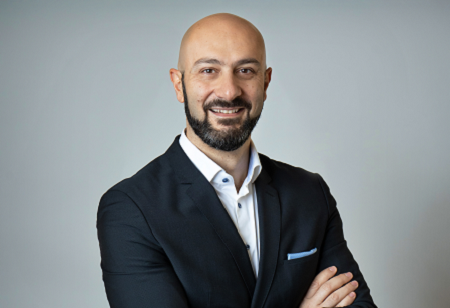
Dr Ir. Arief Yunan, Executive Director, IREEM
Dr Ir. Arief Yunan, M.Si is a leading expert in environmental management and sustainable energy with over 35 years of experience across oil and gas, academia, and policy. He serves as Chairman of IREEM and Secretary General of MEBI, driving energy transition, biomass development, and environmental governance initiatives. He is also Dean at Universitas Muhammadiyah Bandung and a former senior leader at Chevron and PT Caltex Pacific Indonesia.
We use cookies to ensure you get the best experience on our website. Read more...

.jpg "Technology in Cancer Care: A story of evolving paradigms")
.jpg "Bringing Shop Floor to Manufacturer's palm: Smart Factory Solutions for tomorrow")