A quiet shift is taking place in boardrooms across India. In addition to strategy decks and performance charts, leaders are resorting to something more intimate — coaching. As workplaces evolve with hybrid models, digital disruptions, and emotional burnout, executive coaching has emerged as a vital compass for leadership development. What was considered as a luxury of only senior executives has now become a need across organizations.
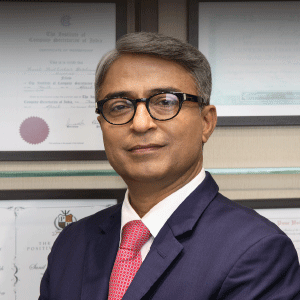
In the context of this increasing awareness, Dr Sunil Deshmukh’s journey stands out for the way he bridges corporate leadership and human development. He did not plan his career as a coach, it just happened as the result of decades of working with the global teams, change management, and mentoring professionals. What started as a personal discovery in the course of his leadership study in Oxford University eventually turned into a calling that changed his career path.
A Journey Rooted in Reflection & Purpose
He had his initial experience of professional coaching through the Advanced Leadership Management program at Oxford University in 2010-11. Assigned a personal coach for one-on-one sessions, he found out the strength of reflective dialogue and the way it could be the key to a greater awareness. The experience remained with him even after the program ended.
During his corporate career, as CFO, MD, and subsequently Group CEO, he was attracted to a leadership style based on coaching. Instead of instructing, he used to guide by asking questions that made people think, reflect and develop. His interest deepened even further when he studied Applied Positive Psychology and trained as a certified counselor, which gave his leadership style a more emotional and human touch.
When the world slowed down due to the pandemic, Dr Sunil paused and took the time to formalize his long-standing passion. He got his professional certification in coaching during the lockdown and started practicing full-time. After more than five years of coaching experience, he now works with senior professionals, business leaders, and CXOs across industries globally. “My focus is clear to help leaders lead with authenticity, purpose, and self-awareness in an environment that is changing faster than ever before”, says Dr Sunil.
A Shift Toward Reflective Leadership
Coaching in India has reached a new horizon in the past few years. In his opinion, the profession has changed over the last five years more than it has been over the last decade. Also, the pandemic, though disruptive, became an unexpected catalyst as it brought the understanding of the necessity of reflection, empathy, and connection in the workplace. And as a result of this, organizations started to find coaches not only to enhance performance but also to cultivate clarity, strength, and emotional health.
He believes that the current leaders are confronted with issues for which no management book could prepare them for. The power to make sense of constant change, such as to pivot, absorb shocks, and still move forward, is what defines effective leadership today. Another crucial change is the shift toward human-centric leadership. The pandemic taught executives that compassion and empathy are not soft skills; instead they are the foundation of trust. DR Sunil stresses the fact that leadership today, is less about authority and more about understanding people.
Furthermore, technology has also redefined expectations. Leaders are now required to be digitally fluent while staying emotionally grounded. To fill this two-fold need, Dr Sunil emphasizes the art of storytelling. For him, great leaders are great storytellers, they use narrative to connect vision with purpose and inspire people across every level of the organization.
Coaching Beyond the Boardroom
In his sessions, no two coaching conversations are alike. Few clients struggle in managing dispersed teams, while others with decision fatigue or feeling isolated at the senior levels. He guides them through these challenges with clarity by active listening and thought-provoking questions. For him, silence is often the starting point allowing clients to think, reflect, and find their own answers rather than being told what to do.
His style is deeply shaped by experience. Having lived and worked across five countries, he brings an instinctive understanding of cultural nuances and workplace diversity. His background in psychology and counseling equips him to handle emotional complexities, while his rise from a junior accountant to a global CEO gives his coaching rare credibility. He speaks the language of both empathy and enterprise.
He often says emotional intelligence lies at the core of good leadership. It’s not about being agreeable; it’s about awareness, control, and empathy. In his sessions, he recreates real situations that make clients see how they respond under stress. Whether managing conflict or facing uncertainty, the aim is to help leaders recognize their emotional patterns and respond with thought, not impulse.
He recalls working with a senior finance professional whose career had stalled. Through their sessions, she saw how her perfectionism was holding her back and creating friction. That moment of self-awareness became a turning point. In another case, a Founder-CEO agreed to take part in a 360-degree feedback process. The results revealed blind spots he had never noticed. Over time, those insights changed not just how he led, but how his team viewed him.
Dr Sunil measures success in terms of change that is permanent and not temporary. Coaching, he says, is not a quick solution. After sessions, he checks on clients to determine the longevity of changes. Feedback often comes from people around his clients, colleagues who see the difference long before the leaders themselves do. His words to new entrants are clear: coaching isn’t a transaction, it’s a commitment. It demands patience,
humility, and a genuine wish to help others grow. When the intent is right, results follow. Dr Sunil prefers Feed forward vs feed back as best way to coach the leaders.
A Vision Beyond the Boardroom
In the next ten years, he wants to bring coaching beyond boardrooms. He believes its value should reach every level of an organization. When people learn to think reflectively and act consciously, workplaces change. His vision is to bring coaching into Indian companies, creating a culture where honest conversations and personal growth become part of daily work.
He also hopes to take coaching to students. Bringing it into colleges and universities, he says, can help young professionals build emotional intelligence before they enter the workplace. Early awareness can shape future leaders who lead with balance and empathy.
Alongside his coaching work, he writes often on LinkedIn, sharing insights from his years of leadership and experience. He also served as the Global Chairman of the Institute of Management Accountants (IMA), USA becoming only the second non-American in the institution’s 105-year history to hold the role. He also recently got awarded a D.Lit in Corporate Leadership and Management Accounting by California Public University, USA, in recognition of his contribution to the profession.
My focus is clear—to help leaders lead with authenticity, purpose, and self-awareness in an environment that is changing faster than ever before
This year, he also published “Videshmukhi”, a memoir of his life and career, an autobiographical account that traces his journey from modest beginnings in India to leading the global IMA community. The book has been described as a thoughtful blend of resilience, risk-taking, and lifelong learning. It highlights the value of emotional intelligence, disciplined growth, and the role of strong networks in shaping a fulfilling career. Readers and reviewers note its universal appeal, calling it a relatable story for students, professionals, and leaders alike. With perspectives from global figures, such as Marshall Goldsmith, the book brings together diverse insights that reinforce Dr Sunil’s belief in purpose-driven leadership.
He remains closely connected with the International Coaching Communities through various organizations, contributing to discussions that shape the future of the profession.
Looking ahead, his goal stays clear to reach more people through coaching, to bring its benefits to those who need it most, and to keep learning through each exchange. For him, legacy isn’t about titles or awards. “It’s hearing a client say, even years later, ‘Because of that coaching, I grew.’ That quiet line, I believe, says everything about my work and the purpose that drives it”, Dr Sunil concludes.
Dr Sunil Deshmukh, Leadership Coach & Strategic Consultant, Sunil Deshmukh. com
Dr Sunil Deshmukh is a global executive coach and former corporate leader with over three decades of experience across five countries. He holds a D.Lit in Corporate Leadership and Management Accounting from California Public University, USA. He is a certified coach and counselor, and served as Global Chairman of the Institute of Management Accountants (IMA), USA—only the second non- American in its 105-year history. He now mentors leaders and CXOs worldwide, helping them lead with awareness, empathy and purpose.
We use cookies to ensure you get the best experience on our website. Read more...

.jpg "Technology in Cancer Care: A story of evolving paradigms")
.jpg "Bringing Shop Floor to Manufacturer's palm: Smart Factory Solutions for tomorrow")