Plastic waste is moving from the margins of environmental policy to the center of industrial strategy. For businesses and governments alike, the challenge is no longer limited to disposing of plastics responsibly; it is about recovering their economic value, reducing dependence on virgin resources and building viable circular supply chains. With roughly 400 million tonnes of plastic produced globally each year and around 300 million tonnes discarded, according to GUUN's 2024 TNFD Report, the need for scalable recycling models is increasingly evident.
Against this backdrop, Japan-based GUUN CO., LTD. is positioning waste not as an endpoint, but as the starting point of a new resource cycle. Headquartered in Yokohama, GUUN was established in 2001 and adopted its current name in 2017. Drawing on decades of experience in the broader waste business, the company has evolved from conventional treatment and disposal toward recycling, environmental consulting and integrated circular-economy solutions.
At the heart of this evolution is a larger ambition: to move beyond the identity of a waste management company and become a creator of sustainable social infrastructure. By combining recycling technology, project implementation and partnerships with businesses and municipalities, GUUN is developing models in which waste can remain within regional economies as a productive resource.
From Waste Treatment to Resource Creation
GUUN's transformation reflects a fundamental change in how waste is being valued. As Japan advances its Green Transformation, or GX, resource circulation is becoming increasingly connected to decarbonization, energy security and industrial resilience.
A key element of GUUN's proposition is its ART initiative, designed to address waste streams in which plastics are mixed or contaminated with organic materials. Such waste has traditionally been difficult to recycle and has often been incinerated. GUUN's approach separates the waste streams so that recoverable plastics can instead be converted into useful resources, including RPF, or Refuse Paper & Plastic Fuel.
The company also operates material and thermal recycling businesses. Its material recycling operations process used plastics into recycled pellets, while its thermal recycling operations convert waste plastics into solid fuels for industrial heat and power applications.
This capability represents more than a technical intervention. It allows businesses to reconsider waste as a recoverable asset while creating measurable environmental outcomes that can support their sustainability strategies.
Building Circular Economies from the Ground Up
Central to GUUN's philosophy is the concept of local circulation: resources generated within a region should, wherever feasible, be recovered and utilized within that same region.
Under this model, mixed waste collected from retailers and other establishments can be processed into alternative fuel and supplied to factories or facilities requiring energy. For a resource-importing economy such as Japan, such locally recovered materials can function as quasi-domestic resources while reducing dependence on conventional disposal.
“GUUN is complementing this operational capability with data and systems integration. Its environmental consulting business uses public and corporate environmental data to develop practical recycling proposals, while its broader business portfolio includes Environmental System Integration for municipalities, waste-sector companies and waste-generating businesses”, says Shinji Fujieda, President and CEO.
This is particularly relevant as companies face growing pressure to substantiate their environmental performance. Rather than merely claiming that waste has been responsibly managed, businesses increasingly need evidence of resource recovery, emissions reductions and progress against broader sustainability objectives. GUUN's emphasis on quantifying recycling outcomes helps connect physical waste management with corporate environmental disclosure.
GUUN's emphasis on quantifying recycling outcomes helps connect physical waste management with corporate environmental disclosure
Partnerships that Extend the Impact
Technology alone cannot build a circular economy at scale. GUUN therefore views public-private partnerships as another pillar of its growth strategy. “Japan’s municipalities face a combination of aging infrastructure, financial constraints, demographic change and shortages of technical personnel. Instead of positioning local governments merely as purchasers of recycling equipment, GUUN seeks to work alongside them to design locally appropriate resource-circulation systems. Its proposition combines technology with project design, investment and implementation capabilities”, speaks Shinji Fujieda, President & CEO.
The same philosophy is extending beyond Japan. GUUN has operated a waste-plastic fuel production facility in Cebu, the Philippines, since 2017, and its Philippine operations have developed into a joint venture with SM Prime aimed at expanding recycling infrastructure and supporting local governments.
For GUUN, international expansion is therefore not simply about exporting machinery. It is about adapting the company's experience in recycling and circular-economy development to the needs of fast-growing Asian markets.
From Recycling Company to Sustainable Infrastructure Partner
Looking ahead, GUUN sees several forces reshaping the sector: the strategic importance of domestic resource recovery, aging municipal infrastructure, increasingly evidence-based corporate environmental compliance and rising waste volumes across emerging Asian economies. Its roadmap is built around expanding public-private partnerships, strengthening Environmental System Integration for businesses and municipalities, and taking its solution-development capabilities overseas through International SI. The company also intends to enhance existing recycling technologies while exploring emerging challenges such as recovering lithium batteries from electric vehicles and electrical equipment.
For President and CEO Shinji Fujieda, however, GUUN's transformation carries a broader purpose. Having steered the company through difficult periods and repositioned it from a service provider toward a solution creator, he sees the next phase as an opportunity to help transform the wider waste sector itself.
The long-term ambition is clear: GUUN wants resource circulation to be regarded as essential social infrastructure. In doing so, the company is seeking to demonstrate that the future of plastic waste recycling lies not simply in managing what society discards, but in continuously finding new value in what it leaves behind.
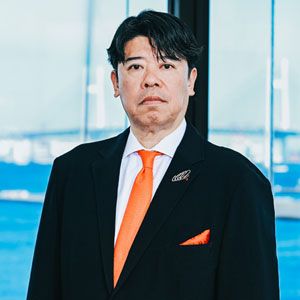
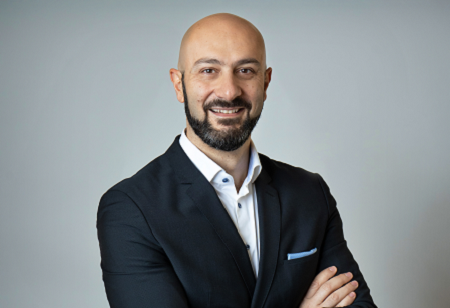
Shinji Fujieda, President & CEO
Shinji Fujieda, President and CEO of GUUN, also serves as CEO of Smart Community and G Logistics. He began his career as a professional baseball player in 1984 and joined GUUN in 1997, becoming CEO in 2001. In 2017, he led the company’s transition to the GUUN name. He also holds leadership positions in several public and non-profit organisations, advancing circular economy initiatives and policy development nationally and internationally.
We use cookies to ensure you get the best experience on our website. Read more...
.jpg "Technology in Cancer Care: A story of evolving paradigms")
.jpg "Bringing Shop Floor to Manufacturer's palm: Smart Factory Solutions for tomorrow")