As businesses operate across increasingly interconnected markets, quality, safety, regulatory compliance and sustainability have become critical to maintaining competitiveness. Testing, Inspection and Certification (TIC) organizations play an important role in this environment, independently assessing whether products, processes and management systems meet applicable standards.
Their role is becoming even more significant as exporters navigate diverse market requirements while industries face greater scrutiny around environmental performance, traceability and responsible production.
Within this evolving landscape, PT Mutuagung Lestari Tbk (MUTU International) has built a comprehensive TIC platform spanning testing, inspection, certification, sustainability services, environmental assessment, and validation and verification.
Established in 1990, the Indonesian company today supports more than 6,000 domestic and international organizations and customers, with international reach extending across Southeast Asia and other Asian markets, including Malaysia, Vietnam, China and Japan through its regional operations, partnerships and internationally recognized certification activities.
Its capabilities enable businesses to demonstrate compliance, manage regulatory and operational risks, strengthen product credibility and access domestic and international markets.
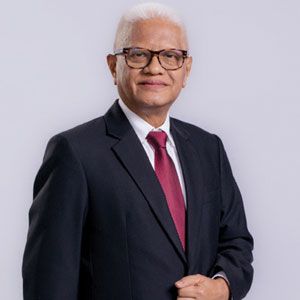
Leading this journey is Arifin Lambaga, President Director, who has been associated with MUTU’s leadership since 1992 and has served as President Director since 1995. A Chemical Engineering graduate from Universitas Jayabaya with a Master’s degree in Economics from Universitas Indonesia, Lambaga has also contributed to Indonesia’s standardization and conformity-assessment ecosystem through leadership roles in industry and standards bodies. His tenure has accompanied MUTU’s evolution from a domestic testing and certification organization into a publicly listed TIC company with growing regional ambitions.
Building Credibility through Technical Competence
Reliability in the TIC industry depends fundamentally on independence, technical competence and consistent methodologies. MUTU has developed its service model around these principles, supported by experienced professionals and internationally recognized accreditation. Its laboratories are accredited to ISO/IEC 17025 by Indonesia’s National Accreditation Committee (KAN), with MUTU becoming the country’s first testing laboratory to receive KAN accreditation under LP-001-IDN. Its laboratories operate under internationally recognized testing standards and accreditation requirements, supported by methods applicable to specific products and markets.
Beyond laboratory testing, MUTU provides inspection, auditing, certification, validation and verification services covering management systems, products, sustainability schemes, environmental requirements and market-access standards. Its greenhouse-gas validation and verification activities are accredited by KAN and conducted under ISO/ IEC 14065 requirements.
MUTU has also been accredited by KAN for greenhouse-gas validation and verification since 2015, positioning the company to support organizations and projects navigating Indonesia’s evolving carbon and sustainability ecosystem. This integrated model allows MUTU to address compliance as part of a broader business requirement rather than as an isolated certification exercise.
Combining Technology with Industry Expertise
As industries and regulatory frameworks become more sophisticated, TIC providers must continually strengthen both their technical infrastructure and sector knowledge. MUTU’s laboratories employ advanced analytical and testing technologies, including chromatography, spectrophotometry, mass spectrometry and specialized material and environmental testing equipment.
These capabilities support applications across forestry products, food, environmental samples, microbiology, materials and other industrial segments. Equally important is MUTU’s understanding of different operating environments. Its portfolio serves agriculture and plantations, forestry, food and fisheries, manufacturing, energy, logistics, construction, public services, environmental services and corporate sectors.
MUTU is focused on maximizing existing investments, expanding its service portfolio, strengthening productivity and digital capabilities, and pursuing strategic partnerships and regional opportunities
Rather than applying a uniform assessment model, MUTU considers each client’s industry, product characteristics, regulatory environment and intended market. The company then determines an appropriate pathway encompassing documentation, assessment, audit, review and certification. This becomes particularly relevant for exporters, where businesses may need to satisfy market-specific schemes and requirements across Japan, the United States, Europe and other international markets.
Digitalization is increasingly complementing these capabilities. MUTU is accelerating digital transformation and adopting flexible assessment approaches, including remote-friendly audit and review processes where appropriate, with the objective of improving productivity, responsiveness and process efficiency.
Scaling Services and International Reach
MUTU’s development has been accompanied by continued service diversification and financial growth. Revenue increased from Rp286.71 billion in 2023 to Rp308.84 billion in 2024 and reached Rp331.48 billion in 2025, representing year-on-year growth of 7.33 percent in 2025. Testing remained the largest revenue contributor in 2025 at approximately Rp134.6 billion, followed by certification at Rp110.3 billion and inspection at Rp86.6 billion.
The company has simultaneously invested in expanding its capabilities. During 2025, MUTU allocated resources to expand Halal laboratory capabilities and develop new service schemes, including Import Technical Verification/ Traceability (VPTI), Sustainable Biomass Programme (SBP) and Green Gold Label (GGL). Its portfolio also encompasses international certification and sustainability schemes such as JAS, CARB and ISCC. Following its listing on the Indonesia Stock Exchange in 2023, MUTU has entered a new phase of governance, transparency and long-term expansion.
Building MUTU into a Regional Green Partner
Looking ahead, the company sees opportunities emerging from the green economy, carbon markets, renewable and new energy, sustainable supply chains, halal industries and increasingly demanding international trade requirements. Its existing capabilities across environmental services, forestry, palm oil, sustainability and carbon-related verification provide a foundation for addressing these areas.
Entering 2026, MUTU is focused on maximizing existing investments, expanding its service portfolio, strengthening productivity and digital capabilities, and pursuing strategic partnerships and regional opportunities. Through this approach, the company aims to evolve beyond conventional TIC services and establish itself as a trusted regional green partner, helping businesses navigate the increasingly interconnected demands of quality, safety, compliance, sustainability and international market access.
Arifin Lambaga, President Director
Arifin Lambaga, President Director of MUTU International, brings over three decades of leadership in certification, standardization, and quality management. A Chemical Engineering graduate from Universitas Jayabaya and a postgraduate in Economics from Universitas Indonesia, he has led MUTU International since 1995. His expertise spans ISO standards, sustainability certification, food safety, anti-bribery systems, and international standardization. He has also held leadership roles across Indonesian and international standardization bodies, including BSN, ISO committees, and professional associations.
We use cookies to ensure you get the best experience on our website. Read more...





.jpg "Technology in Cancer Care: A story of evolving paradigms")
.jpg "Bringing Shop Floor to Manufacturer's palm: Smart Factory Solutions for tomorrow")