
Office spaces across Singapore have been quietly changing shape. Since COVID-19, companies have reduced their physical footprint while asking more from every square foot they keep. Fixed desks have faded. Shared settings and hybrid work patterns have taken over. The workplace today is expected to support focus, collaboration, and well-being at once. In a city where space is costly and work habits remain fluid, design has become less about permanence and more about choice.

It is within this shifting context that AWP Architects finds its relevance. The firm was established in 1957 as an architectural practice, but ventured into interior design in 2006 following requests by clients to have continuity between the building and the interior.
Instead of handing over completed structures for others to interpret, the practice chose to carry its architectural concepts indoors. The move was less about expanding services and more about preserving intent, ensuring that a single design narrative could run from master planning to the smallest interior detail.
An Interior Practice Built on Architectural Logic
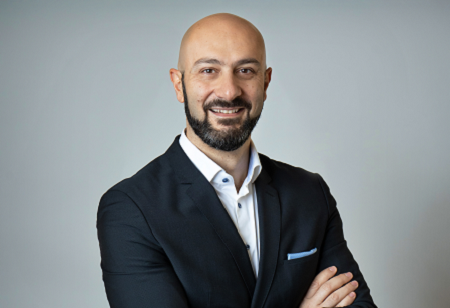
Danny Hinde, Director at AWP Architects, says, “We shape interior design by architectural thinking. Spaces are considered in relation to volume, structure, and movement, not just finishes. This approach becomes especially important in workplaces, where flexibility, density, and circulation must coexist.”
Even when the firm is not responsible for the base building, its teams are trained to read architecture closely and respond with interiors that feel grounded rather than imposed.
The team itself reflects this balance. Architects and interior designers work together, each bringing a different way of seeing space. Architects focus on scale and structure, while interior designers bring sensitivity to color, texture, and atmosphere.
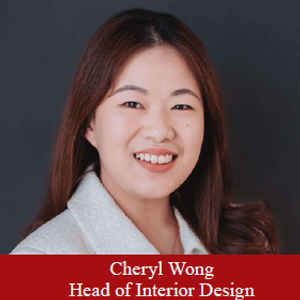
The overlap allows ideas to be tested from multiple angles. This balance is reflected at the leadership level as well, with Danny and Jilyn (AWP - Group Operations Director) bringing architectural training to the practice, alongside Cheryl (Head of ID, AWP), whose background is rooted purely in interior design. Context also plays a strong role. Site conditions, local culture, and client identity inform the design, helping each project develop a ‘Sense of Place’ rather than a repeated look.
The in-house qualified person capability is one of the lesser known yet important strengths of the practice. In Singapore, this position has the legal accountability in regard to the compliance of building and fire regulations. “Such knowledge integrated into the design team enables interiors to be designed to comply with regulatory requirements instead of having to revise it afterwards to fit in,” mentions Danny.
Such a combined arrangement has been useful in complex projects and has led to collaborations with established interior designers from Singapore, Australia, and the United States. “In such cases, the firm often supports compliance, submissions, and coordination, bridging the gap between design intent and statutory approval. The result is a smoother process and fewer surprises on site,” notes Jilyn, Group Operations Director at AWP.
Technology Applied With Practical Intent
Technology supports this way of working without overshadowing it. The firm adopted Revit early and has long used shared three-dimensional models for architecture and interiors. This allows coordination across disciplines from the outset and helps identify clashes before construction begins. For interior projects, this level of coordination reduces variations, controls costs, and keeps timelines intact.
Furthermore, visualization tools and in-house rendering are used to test ideas and communicate intent, while design decisions remain firmly human-led. Artificial intelligence is used sparingly, mainly as a research tool for references and materials. For complex workplace and institutional projects, judgment and experience still drive outcomes.
Recognition Earned through Practice
Cheryl, Head of Interior Design at AWP, mentions, “In the long term, this methodical approach has been recognized through industry awards, often tied to projects that quietly set new benchmarks.” Most of the firm’s developments, both in Singapore and overseas, have received the highest Green Mark or LEED ratings, reflecting a consistent commitment to environmental performance.
In Singapore, the NUS Graduate Residences received the Singapore Institute of Architects Design Award Honourable Mention for both architecture and interior design. The project’s student furniture design and specification later became a prototype across the university’s residential campus. Another milestone came with the Credit Suisse office interiors, which received the first BCA Green Mark Platinum Award for an office interior project. The design introduced floating meeting rooms to address density and volume constraints, an idea that later informed other workplace projects.
Earlier still, the Edwards Lifesciences facility was recognized by the Singapore Institute of Architects (Design Award) for its public engagement. At a time when industrial buildings were typically closed environments, the project opened its production process to visitors through a carefully planned exhibition route, blending function with education.
Expanding Beyond Borders
AWP Architects currently operates across Asia, and regional offices in China, India, Indonesia, Malaysia, Philippines and Vietnam facilitate projects throughout the region. While architecture has long traveled with the firm, interior design is now expanding alongside it, particularly in the workplace, hospitality, and residential sectors. Local teams bring regional insight, while Singapore continues to act as the design anchor.
As work patterns evolve continuously, the practice stays focused on adaptability rather than trends. Its power is in its ability to understand space deeply, responding to limitations with clarity, and carrying ideas through with attention. In an industry that often moves fast, the firm’s steady, considered pace has become its defining quality.
We use cookies to ensure you get the best experience on our website. Read more...


.jpg "Technology in Cancer Care: A story of evolving paradigms")
.jpg "Bringing Shop Floor to Manufacturer's palm: Smart Factory Solutions for tomorrow")